01
Lines come in
Analog POTS, ISDN, T1/PRI, or VoIP/SIP lines arrive at the talk-show frame.
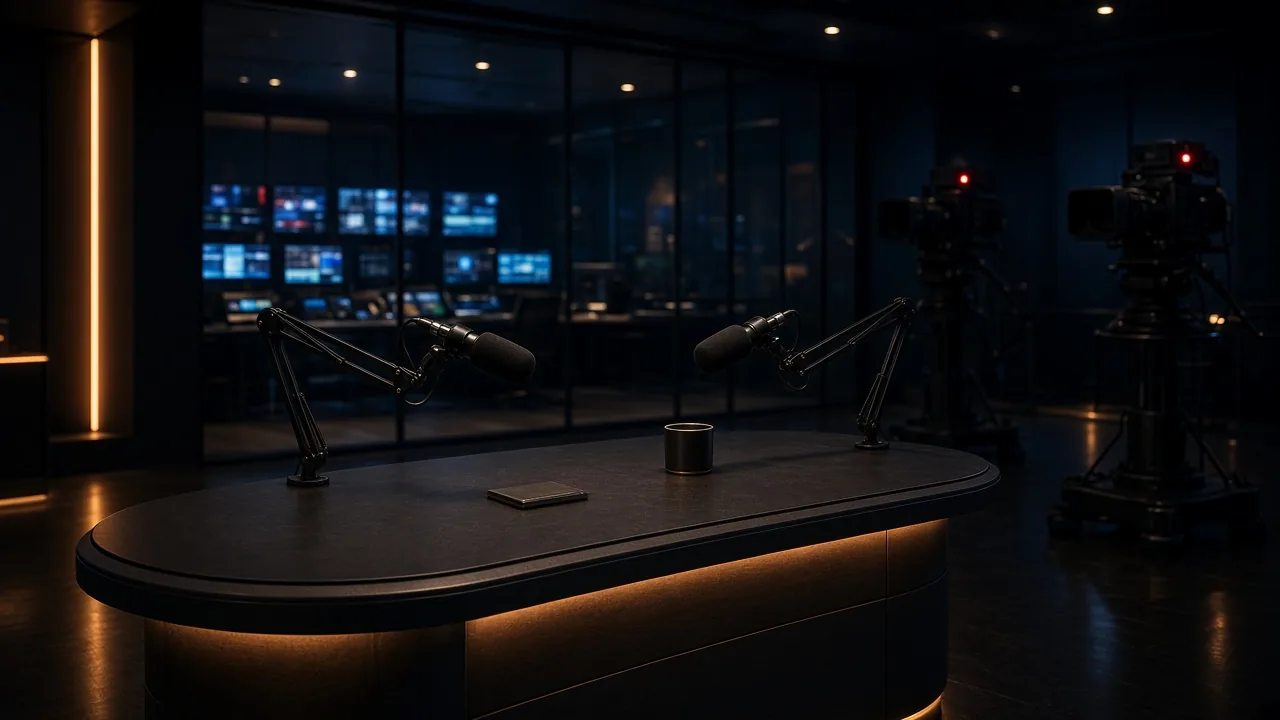
From scratch to live
MediaVision builds a complete television channel from the first plan to a live stream or broadcast: the studio, the talk-show phone system, playout, encoding, apps, websites, news feeds, monitoring, and local AI. We supply and run the software and the hardware. We have been building VoIP systems since 2004. Plans start from $175 per hour.
A planning diagram of the path, not a photo of a specific installation.
A turnkey path
Whether you are starting a new station or finishing a studio that is already underway, this is the path MediaVision designs, builds, and runs. Each stage links to the detail further down the page.
A short questionnaire and the Studio Planner, so we can see the room, the lines, and the show before we specify a system.
The studio itself, plus multi-line hybrids and screener phones so callers can be held, screened, and taken to air.
Automated playout so the channel can run a scheduled playlist when a live show is not on the air.
Contribution encoders and the path from the control room out to the stream or the broadcast chain.
Apps for Roku, Amazon Fire TV, Google TV, and iOS, plus the channel website and news feeds that sit beside them.
A live board for phone lines and caller status, server and network health, and alerts — with room to add stream health.
On-premises speech recognition, a local language model, and spoken response for caller assistance, when you are ready for it.
Ongoing help, plus diagnosis, firmware recovery, and hardware repair for Comrex and Telos systems and related studio gear.
How it works
Analog POTS, ISDN, T1/PRI, or VoIP/SIP lines arrive at the talk-show frame.
Callers wait on hold. A producer uses a Desktop Director or screener PC to take notes and queue the next guest.
The hybrid puts a clean caller into the mixer. Mix-minus keeps the host out of the caller’s ear.
Program audio and video go through the encoder to the stream or the broadcast chain.
The talk-show system
This is the system a live TV studio needs when several guests are waiting to speak. Callers are held, screened, and taken to air one at a time — or more than one at once when the program calls for it.
Multi-line broadcast talk-show systems. The NX12 combines a 12-line selector with multiple hybrids, so several callers can be on air or two studios can share the frame. The TWO x12 is a 12-line POTS/IP talk-show hybrid built for the same job: hold, screen, and take callers to air.
The producer and host control surface. Answer, hold, drop, and put a caller on the air from the desk — the screener phone that sits with the talk-show system, not a standalone hybrid.
Comrex STAC (Studio Telephone Access Center) is a multi-line talk-show phone system in 6-line (STAC6) and 12-line (STAC12) configurations. A rack mainframe with two digital hybrids holds, screens, and takes callers to air from a control surface. A STAC6 can be expanded to a STAC12 with an added telco board and a control-surface sidecar. STAC VIP is Comrex’s later VoIP model, which can handle up to 12 VoIP callers (and traditional lines through a gateway).
JK Audio AutoHybrid and Telephone Hybrid interfaces for single-line caller audio into the mixer — useful when a show needs one clean phone line rather than a full multi-line frame.
Repair service
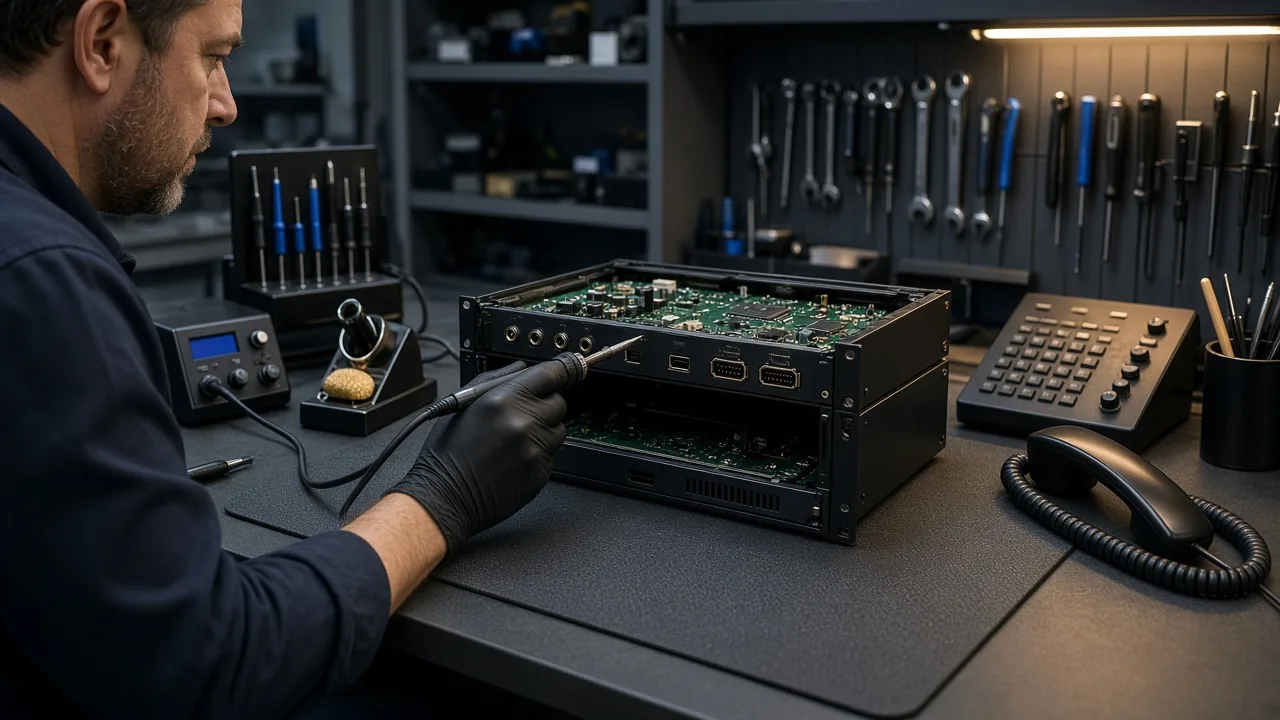
MediaVision diagnoses and repairs Comrex and Telos talk-show systems — including software and firmware problems and damaged devices. If a mainframe will not boot, a control surface has gone dark, or firmware needs to be recovered, we can take a look and tell you what it will take to get the unit back on the air.
We inspect the unit, reproduce the fault, and give you a clear report before any repair work begins.
Software and firmware issues, including units that no longer start or have been left on an incomplete update.
Damaged mainframes, control surfaces, power, and related studio-phone hardware, repaired when the parts and the fault allow it.
MediaVision is an independent repair shop. We are not a factory-authorized Comrex or Telos service center, and this is not a manufacturer warranty service. To request a diagnosis, use the MediaVision contact page or call (714) 888-5959.
Studio systems, A to Z
A talk-show system is only one part of a working channel. MediaVision also builds the studio around it: mixing, contribution encoding for live shots, automated playout and playlists, channel websites, and news feeds.
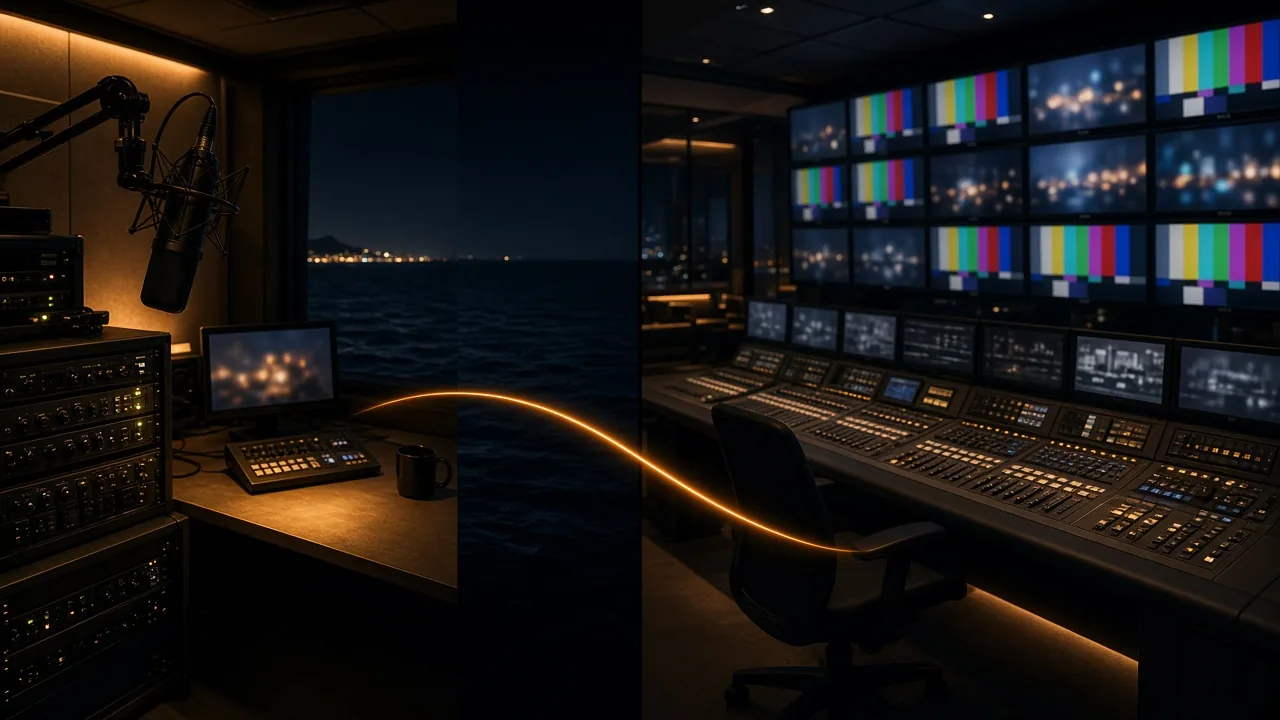
That includes linking a compact studio — for example a room in Egypt — to a U.S. control operation over a stable, secure VoIP and contribution path, so callers, hosts, and program audio stay in sync.
Contribution and mixing gear we work with includes LiveU Solo and Teradek Cube HDMI/SDI encoders, the Mackie DL806 iPad-controlled digital mixer, and Blackmagic Design Mini Converter Heavy Duty HDMI to SDI units.
VoIP since 2004
MediaVision has been building VoIP systems from 2004 to today. That work includes the network security and stability a live studio cannot do without — because a dropped caller or a noisy line is a problem you hear on the air.
Systems we design and operate include Asterisk-based platforms such as Issabel and Elastix, 3CX, SIP trunks and multi-line gateways (including GoIP), and SIP desk phones such as the Snom 821. The same discipline applies whether the studio is in California or a new room being planned in Egypt.
TV and media apps
MediaVision has built and published television and media apps for Amazon Fire TV, Roku, Google TV / Android TV, and iOS. One example still live on Google Play is the Pope Shenouda books app. We can also build the channel website and news feed that sit beside the app.
Channel and media apps for Fire TV devices in the living room.
Roku channel apps, published through MediaVision developer accounts.
Store and sideload TV apps, plus iOS media apps when a channel needs a phone or tablet companion.
Local AI, built here
Today’s systems include local AI that MediaVision built from scratch and runs on-premises — not a public chatbot hooked to a studio line. Current prototypes use on-site speech recognition, a local language model, and on-premises text-to-speech so a prayer line or caller-assistance desk can listen, understand, and answer without sending the conversation to a third-party cloud.
This is the current generation of our studio and phone work. We do not claim that every historic install already runs AI. When a channel is ready, we can add it to a new or existing phone system.
Live monitoring dashboard
MediaVision builds live monitoring dashboards for studios and stations. The graphic below is an illustration with sample labels, not a live board and not a screenshot of a real system.
Boards we have already built and operate include:
Stream and encoder health can be brought into the same kind of station board. We have not claimed a separate LiveU/Teradek encoder monitor as an already-shipping product on this page.
We did not find Uptime Kuma or Grafana in the project files reviewed for this site, so those names are not used as if they were part of the stack.
Illustration only. Labels are generic examples and do not show real callers, hosts, or internal addresses.
A short timeline
MediaVision was formally established in 2004. The founder’s web work goes back earlier; the VoIP and studio-phone story on this page starts in 2004 and continues through the systems we are building now.
Christian television
MediaVision has built studio, phone, website, and app systems for non-profit Christian television, including channels and ministries in California. These are organizations we can name here:
Studio phone and prayer-line systems, including a live operator dashboard and multi-line caller handling.
Studio phone system work for the channel’s live calling and production needs.
A MediaVision-published app, still live on Google Play, for readers and viewers on mobile devices.
Web and media work for the church community in Westminster, California.
Store
These are systems MediaVision has used in real studio work. Prices are today’s used-market prices, not original purchase prices. There is no online checkout and no payment is collected on this page. Product pictures below are illustrations, not photographs of the actual units.
Availability and final condition are confirmed when you request an item — please do not assume a unit is on the shelf until we reply. To request a unit, use the MediaVision contact page or call (714) 888-5959.
12-line broadcast talk-show phone system with multiple hybrids for holding, screening, and taking callers to air.
$899
Request this item12-line POTS/IP talk-show hybrid for live radio and TV caller programs.
$799
Request this itemProducer/host screener phone for Telos talk-show systems. Answer, hold, drop, and take a caller to air.
$275
Request this item6-line Studio Telephone Access Center: mainframe with dual digital hybrids and a control surface for holding, screening, and taking callers to air.
$999
Request this item12-line Studio Telephone Access Center with mainframe and 12-line control surface. A STAC6 can also be expanded to this configuration with an added telco board and sidecar.
$1,599
Request this itemPassive full-duplex auto-answer telephone hybrid for bringing a caller into the mixer.
$89
Request this itemSingle-line telephone hybrid interface for talk-show and IFB-style caller audio.
$89
Request this item8-channel digital live mixer with iPad control, for studio or small-stage audio.
$325
Request this itemWireless live-streaming contribution encoder, HDMI model LU-SOLO-HDMI, for taking a studio or field shot to air.
$800
Request this itemGigabit color-screen SIP desk phone. Useful as a studio or office extension on a VoIP system. Priced per phone.
$35 each
Request this itemCamera-top HDMI contribution encoder with Wi-Fi for live shots and studio streams.
$117
Request this itemAdditional Cube HDMI and HD-SDI contribution encoders from the same family, including a Cube-100 with Bond. Tell us which model you need.
Price on request
Request this itemTeradek Sphere HDMI monitoring and streaming unit.
$100
Request this itemHeavy-duty HDMI to SDI mini converter for studio signal paths. Priced per tested unit.
$75 each
Request this itemPricing
Plans start from $175 per hour; final price depends on the system and the exact project. That covers design, installation, repair, dashboards, and related studio-phone work. Used equipment in the Store is priced separately, item by item.
Tell us about the studio with the short questionnaire and, if you like, the Studio Planner. We will come back with a quote — not a payment request on this page.
Plan your talk-show system
Answer a few questions about the studio. You can email the answers, send them on WhatsApp, or call. Nothing is stored on this website — there is no server-side form.
Studio Planner
This is a planning aid, not a formal engineering drawing. On a phone, tap a block in the list to add it, then drag it on the board. Auto-design builds a starting layout from your questionnaire answers. You can download a PNG; email cannot attach that file, so send the text summary and attach the PNG yourself if you wish.
Next step
Tell us how many callers you need on hold, where the studio is, and whether you already have hybrids or a PBX. We will recommend a path that fits the room — including a four-caller talk-show setup — and quote from $175 per hour, with the final price set by the system and the project.
800 S Brookhurst St, Suite 1B3
Anaheim, CA 92804
Or use the contact form on mediavision.us. We do not collect payment on this page.